 Speak pidgin, anyone?
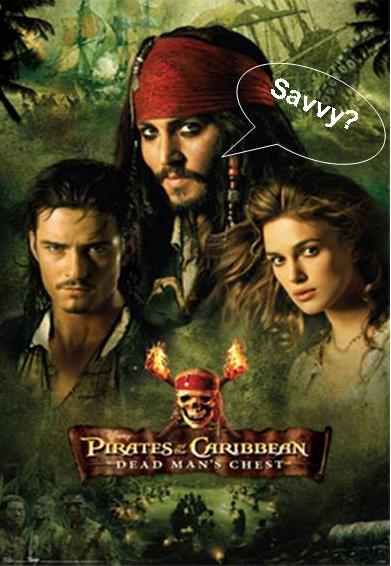
No, I don't mean speak pigeon. Who wants to speak to a bird anyway? If you still don't know what I am talking about perhaps this movie poster might help.
I am not reviewing this movie either but I am rather fascinated by Captain Jack Sparrow's love-affair with this pidgin word "savvy'. I thought that since Jack Sparrow is such an uber-cool pirate, he should have a suave saying that goes with his persona and "savvy" is close to suave, right?! No, no, no... I am JUST KIDDING. Commonsense will tell you what it meant. Understand, comprehendo?! Ok. Let's move on.
So, I discovered further that the word "savvy" is a mix between English and the Portuguese word "sabe". Hmmm...now does that make Singlish, Manglish and Spanglish pidgin too?! Well, unfortunately they aren't. You see, pidgin is a contact language created by European merchants back in the Middle Ages to communicate with the locals or other foreign traders. It is like a second language. Singlish, Manglish & Spanglish hardly qualify because it maybe incomprehensible to those outside it's own community. Can you imagine if I said, "Don't play-play" (Singlish phrase made popular by Singaporean Phua Chu Kang) when I really meant "Please be serious" to a Caucasian American or British?! Awkward....
However, there's a light at the end of the tunnel for some Chinese originated pidgin words or rather Chinglish. You might be interested to know:
- long time no see (everyone says that so no problem here)
- no can do (like that Cool and the Gang song, I forgot the title ?)
- no-go (we use that all the time in everyday American English)
Now, let me thank Wikipedia & Webster for helping me fully understand pidgin...SAVVY?!



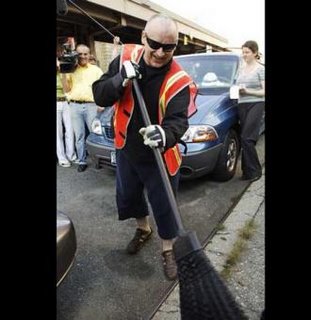
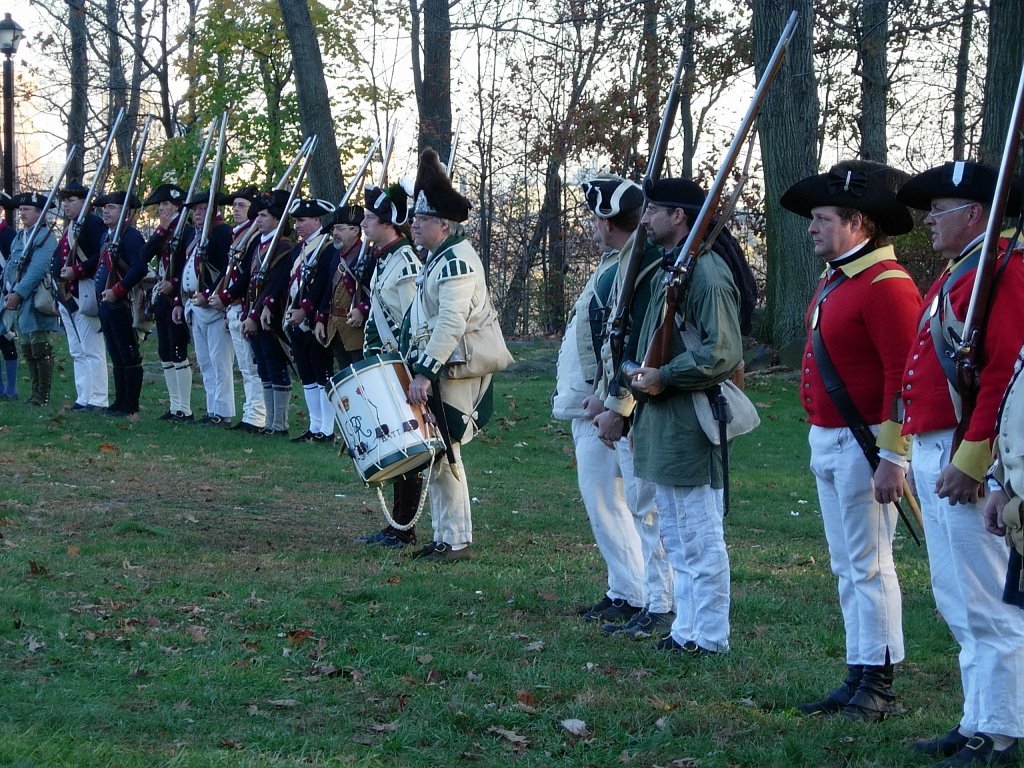
 We learned about keeping cannons clean and prepping it for fire. Cannons were strategically placed here, at this spot, in the 18th. Century to defend New York and the Hudson Valley from the British during the Revolutionary War.